Is Your Asthma Caused by Allergies? A Complete Guide by Dr. Ashish Dungarani
Posted in :
Allergic Asthma: Breathe Easier Today
Do you often feel short of breath after dusting your home? Do you start coughing uncontrollably when the seasons change? You might be suffering from Allergic Asthma.
At Allergy Cure Clinic, we treat patients from across India and around the world who rely heavily on inhalers but never address the root cause of their breathing issues. Asthma is one of the most common chronic diseases globally, but when it is triggered by allergies, it can be managed effectively without lifelong dependency on heavy medication.
In this guide, Dr. Ashish Dungarani explains how allergic asthma works and how you can find long-term relief.
What is Allergic Asthma?
Allergic asthma is the most common type of asthma. It is a condition where your airways tighten when you breathe in an allergen (a trigger). Unlike non-allergic asthma (which might be caused by stress or exercise), this type is directly linked to your immune system.
The Science of Breathlessness:
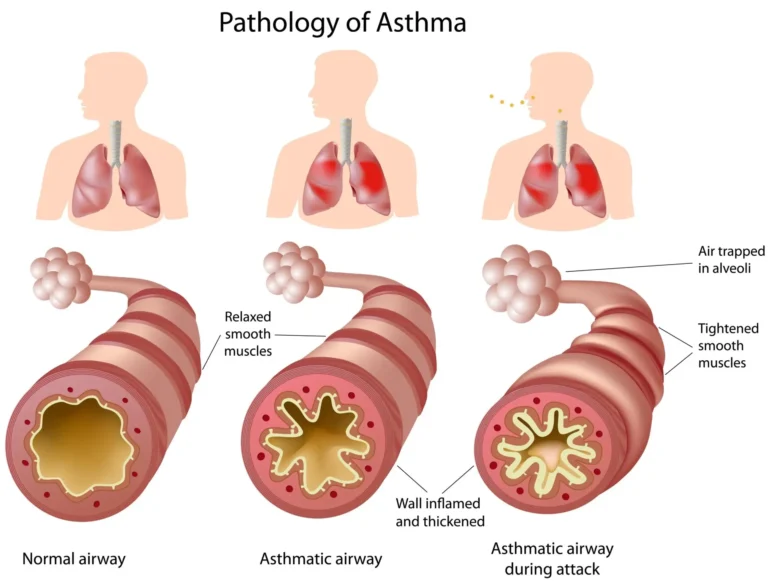
When you inhale a trigger (like dust or pollen), your immune system overreacts. It causes the muscles around your airways to squeeze tight (bronchoconstriction). At the same time, your airways produce excess mucus. This leaves very little space for air to pass through, causing that frightening feeling of “air hunger.”
Common Symptoms to Watch For
Symptoms can appear immediately after exposure to a trigger or build up slowly over time.
Wheezing: A whistling sound when you breathe out.
Shortness of Breath: Feeling like you can’t get enough air into your lungs.
Chest Tightness: A feeling of heavy pressure or squeezing in the chest.
Chronic Cough: Especially at night or early in the morning.
Common Environmental Triggers
Identifying what sets off your asthma is half the battle. While triggers vary by location and climate, these are the most common culprits globally:
Dust Mites: Microscopic bugs living in mattresses, pillows, and carpets found in almost every home worldwide.
Air Pollution & Smoke: Vehicle exhaust, industrial smoke, or even kitchen smoke.
Pollen: Airborne powder from trees, grasses, and weeds (symptoms usually worsen during specific seasons).
Pet Dander: Tiny flakes of skin from cats, dogs, or birds.
Mold & Dampness: Common in humid climates or during monsoon seasons.
How We Diagnose & Treat It
Many patients assume they just have “weak lungs.” However, accurate diagnosis is crucial.
1. Pulmonary Function Test (PFT)
We use advanced Pulmonary Function Testing (Spirometry) to measure exactly how well your lungs are working and the volume of air you can exhale. This confirms the severity of the asthma.
2. Allergy Testing
Once asthma is confirmed, we must find the cause. We use Skin Prick Tests or specific IgE Blood Profiles to identify exactly which allergen is causing your airways to close.
3. Immunotherapy (The Long-Term Solution)
While inhalers help open your airways temporarily, Immunotherapy treats the immune system itself. By gradually desensitizing your body to the allergen, we can reduce—and often eliminate—the need for daily medication over time.
Home Management & Prevention Tips
Alongside medical treatment, making your home “asthma-safe” is vital:
Dust-Proof Your Bed: Wash bedsheets in hot water weekly to kill dust mites.
Monitor Humidity: Keep indoor air dry to prevent mold growth.
Stay Indoors During Peak Pollen: Usually early mornings on windy days.
Avoid Strong Scents: Agarbatti (incense sticks), strong perfumes, and cleaning chemicals can trigger attacks.
Wear a Mask: When cleaning or traveling in heavy traffic areas.
When to See a Doctor?
If you find yourself using your “rescue inhaler” more than twice a week, your asthma is not under control. Ignoring it can lead to permanent lung damage.
Dr. Ashish Dungarani at Allergy Cure Clinic offers:
Comprehensive Lung Check-ups.
Precise Trigger Identification.
Online Video Consultations for patients outside Surat.
Take the First Step to Better Breathing
You don’t have to live your life around your inhaler. Get to the root of your breathing difficulties.